🌱 Benefits of Cloud-Native Architecture
Cloud-native architecture is not just “hosting the same old system on someone else’s server.” It means the platform is designed to use cloud capabilities from the beginning: elastic compute, managed storage, automation, APIs, resilience, security integration, and usage-based billing.
For data warehousing, this changed the main question from:
“How much hardware should we buy?”
to
“How quickly can we deliver trusted data to the business?”
That shift is the heart of modern cloud data platforms.
1. What Cloud-Native Means in Simple Terms ☁️
A cloud-native system is built to grow, shrink, recover, integrate, and operate through cloud services. It is designed for change.
The most important ideas are:
- Elasticity — resources can increase or decrease based on workload.
- Managed operations — the provider handles much of the infrastructure work.
- Automation — environments, pipelines, monitoring, and deployments can be automated.
- Service integration — the platform connects with storage, identity, networking, BI, data engineering, and AI services.
- Resilience — systems are designed for availability, backup, recovery, and failure handling.
- Security by design — encryption, identity, access control, and auditing are built into the platform.
In a traditional environment, teams often spend a lot of time planning hardware capacity. In a cloud-native environment, teams spend more time designing data flow, governance, security, and cost control.
2. Why Cloud-Native Matters for Data Warehousing 💼
Cloud-native architecture helps data teams respond faster to business needs. A finance team may need month-end reports. A marketing team may suddenly need campaign analysis. An operations team may need near-real-time dashboards. In a fixed infrastructure model, these peaks can create delays or require expensive permanent capacity.
Cloud-native platforms make this easier because compute and services can be adjusted when demand changes. Teams can create development and test environments faster, run heavy workloads when needed, and reduce resources when work is finished.
The business value is not only technical. It shows up as:
- faster reporting cycles;
- reduced infrastructure planning effort;
- easier onboarding of new data sources;
- better collaboration between business, analytics, and engineering teams;
- improved support for modern data types and modern tools;
- more flexible cost management.
This does not mean every cloud project automatically succeeds. Cloud gives flexibility; good architecture turns that flexibility into value.
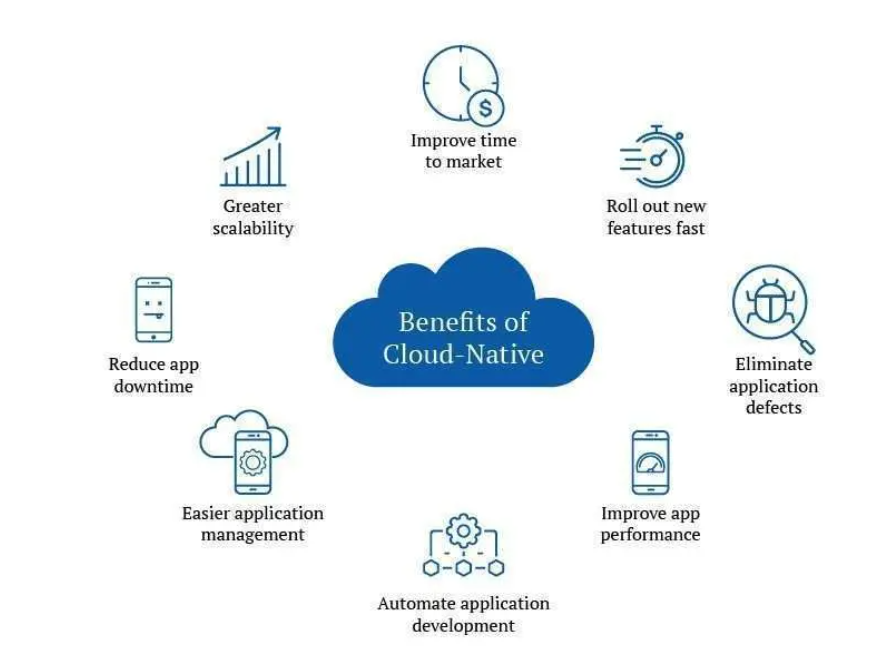
3. Core Benefits at a Glance 🚀
| Benefit | What it means in practice |
|---|---|
| Scalability and elasticity | Handle changing workloads without permanently owning peak capacity. |
| Speed and agility | Provision environments and deliver analytics faster than hardware-led projects. |
| Cost flexibility | Move from large upfront infrastructure spend to usage-based operating cost. |
| Reliability and recovery | Use cloud platform capabilities for backup, availability, replication, and recovery planning. |
| Integration ecosystem | Connect with ingestion, orchestration, BI, governance, AI, and application services. |
| Security foundation | Use built-in encryption, identity integration, network controls, access policies, and audit logs. |
4. Cloud-Native Does Not Mean “No Responsibility” 🧭
This is the most important correction for learners: cloud-native reduces infrastructure burden, but it does not remove responsibility.
The work changes shape.
Instead of asking only:
- Which server should we buy?
- How much disk do we need?
- When do we patch the system?
Teams now ask:
- Which region should host the data?
- Who can access sensitive data?
- How do we prevent unnecessary compute cost?
- What happens if a pipeline fails?
- How do we monitor usage and performance?
- How do we recover from accidental changes or regional failure?
A simple way to remember it:
Cloud moves teams from hardware management to platform governance.
The provider manages many platform layers, but the organization still owns data quality, access decisions, business definitions, cost discipline, compliance process, and operating standards.
5. Common Misunderstandings ⚠️
-
“Cloud is always cheaper.”
Cloud is flexible, not automatically cheap. Cost improves when compute, storage, and data movement are actively managed. -
“Auto-scaling solves performance.”
Scaling helps, but poor data modeling, inefficient queries, bad file design, or unclear workload separation can still create slow systems. -
“Security is fully handled by the provider.”
The provider secures the platform foundation. The customer still configures users, roles, access policies, network controls, classification, and audit processes. -
“Everything should move to cloud immediately.”
Migration should be phased. Business value, risk, dependency, latency, cost, and compliance should guide the roadmap.
🏁 Summary
Cloud-native architecture makes modern data warehousing more elastic, managed, integrated, and responsive to business needs.
The best takeaway for this stage of the course:
- Cloud gives flexibility.
- Flexibility needs governance.
- Governance turns cloud platforms into reliable business systems.